How to fix your posture. Open it, then hold it.
Little and often through the day, and strength that holds the shape.
To fix your posture, change it little and often rather than holding one perfect position. Through the day, draw your head back over your shoulders, open the chest and the front of the hips, and change position often. Then train the muscles that hold you up: the upper back, the back of the hips and the trunk.
How to fix posture and slouching, in order.
- 1. Measure first. The Five Minute Baseline includes an overhead squat check: arms overhead, heels down, thighs to parallel. There is no published reference for it, so it is scored as your own baseline.
- 2. Change position often. Stand for calls, sit for writing. No single position is right for a whole day.
- 3. Bring your head back over your shoulders. Sitting tall, slide your head straight back, as if making a double chin, then let go. More on forward head posture.
- 4. Shoulder blades back and down. Draw them gently together and down, hold, release. Arms relaxed.
- 5. Open the front of the hip. Stand, step one foot back, squeeze the buttock on that side and feel the front of the hip open. Then the other side.
- 6. Train the muscles that hold you up. The upper back, the back of the hips and the trunk. The WHO guidelines for adults include muscle strengthening of the major muscle groups on two or more days a week.
If you have pain in your back or neck, see your GP or a physiotherapist before you add exercises. This page does not treat pain.
Posture meaning: how you hold yourself all day.
Posture is the way you hold your body as you sit, stand and move. It is not one position you get right once and keep. What good posture is sets out the shape, standing and sitting.
Posture always tells the story. How you stand and move day to day shows the habits that shaped your body, not just the symptoms those habits produced later. That is why it is one of the first things I look at.
How can I correct my posture at home?
Most of what holds good posture can be trained at home with no kit. Move slowly and stop if anything hurts.
- A row for the upper back. A resistance band fixed in a closed door, or a backpack loaded with books, pulled towards your ribs. Squeeze the shoulder blades back and down, then lower slowly.
- A chest lift lying face down. Arms by your sides, lift your chest a little off the floor, hold, and lower. Small and controlled.
- A hip lift from the floor. Lie on your back, knees bent, and lift your hips until your body is straight from knees to shoulders.
- Reach overhead. Stand, reach both arms up as high as they go with your ribs down, then lower them slowly. The full set is on posture exercises.
Good posture: stretching opens, strength holds.
Stretching between meetings is the start. In my experience, on its own it has worn off by the end of the afternoon. What changes how you sit and stand for longer is strength in the muscles that hold you upright. I've found the overhead squat essential for long term function and postural strength, so it is one of the first movements I look at.
If you work at a desk, the short movements for the working day are on posture exercises for desk workers. In coaching, your weekly written review covers your focus, your posture and recovery routines, and your progress.
What people ask first
What is posture?
Posture is the way you hold your body as you sit, stand and move. It is not one fixed position. How you stand and move day to day shows the habits that shaped your body.
How can I correct my posture at home?
Short movements through the day: a chin tuck, shoulder blades back and down, a reach overhead and a hip opener. Then strength for the upper back, the back of the hips and the trunk, which needs no kit at home.
How do I stop slouching?
Change position often rather than holding yourself upright all day, and tie a short reset to something that already happens, such as the end of every call. A habit needs a trigger, not a reminder.
Will fixing my posture fix my back pain?
I do not make that promise. Pain needs a proper assessment from your GP or a physiotherapist. What I work on is how you move and how strong you are, alongside their advice.
What does coaching with ZTraining cost?
Z12 is 12 weeks for £900 in total, with a full refund if you cancel within 14 days of signing up, even if coaching has started. Z24 is 12 more weeks for £2,100, in one payment or two, only if we both agree it is needed.
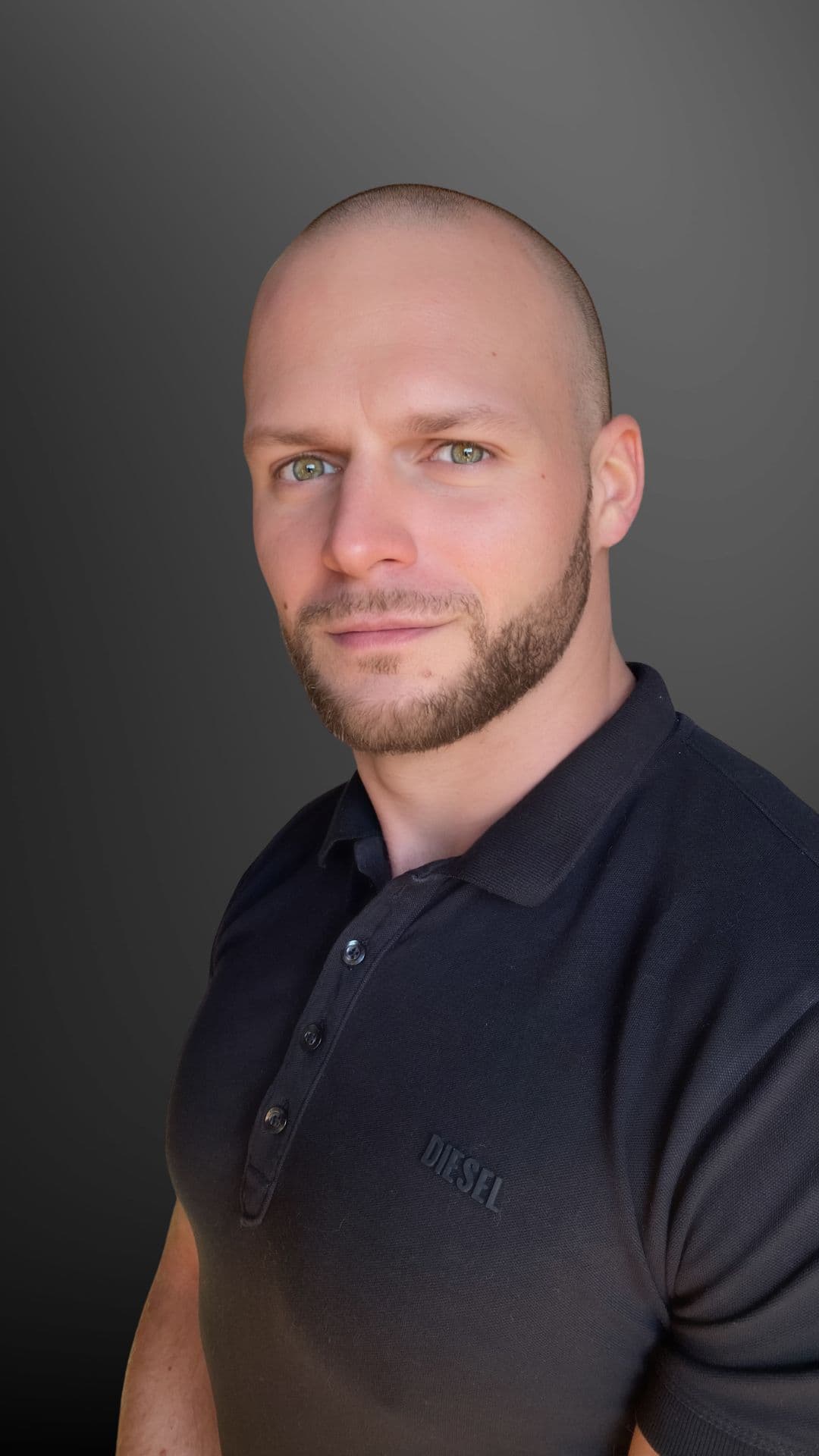
Francesco Zen, founder of ZTraining
Last reviewed 17 November 2026. General information, not medical advice: if you have a health condition, or have not exercised for a long time, talk to your GP before you start.
Twenty minutes, with me.
We talk about your week, your health and what you have tried before. If the programme fits you, I will say so. If it does not, I will say that too.