Golf fitness. Hips, trunk, upper back.
Strength training for golf, at home.
Strength training for golf starts with the back of the hips, the trunk and the upper back, with balance on one leg. At home, a hip lift, a trunk hold, a row and a one leg stand on two or more days a week are enough to start. Make each one harder only when it is steady.
Golf strength training at home, in order.
- 1. Measure first. The Five Minute Baseline is three quick checks at home, balance, a squat and your energy, scored on your device.
- 2. A hip lift from the floor. Lie on your back, knees bent, and lift your hips until your body is straight from knees to shoulders. If the lower back arches, the hip stops working.
- 3. A trunk hold. The middle of the body, held still while the arms and legs work.
- 4. A row for the upper back. A resistance band fixed in a closed door, or a backpack loaded with books, pulled towards your ribs.
- 5. A one leg stand. Near a wall or a worktop, with something to hold.
- 6. Make it harder only when it is steady. Two legs to one for the hip lift, then lower more slowly with a pause at the bottom.
Strength on two or more days a week: WHO 2020 guidelines for adults.
Strength training for golf: what the swing asks for.
A tight hip is rarely isolated. A rounded shoulder or a sore lower back is often part of the same chain, so I look at posture and the whole chain, not one joint alone.
Core and posterior chain first, because they support posture and protect the joints that take the most load. Stretching opens the range; strength in the back of the hips and the trunk is what holds it.
Golf, done properly, forces you to train the core and the glutes. Like every sport, it is ideal first for your head and for time with people. So I recommend it, with a base of functional strength underneath.
The swing is a slow turn of the trunk away from the target, then a very powerful turn back through the ball, repeated many times a round. Low back pain is often called the most common golf injury, and a review of the research advises building the strength and endurance of the trunk muscles, and keeping the hips mobile.
That is why the hip lift, the trunk hold and the row come before anything fast.
The swing and the lower back: Lindsay and Vandervoort, Asian Journal of Sports Medicine, 2014.
Golf fitness: common mistakes.
- Stretching without strength. Stretching opens. Strength holds.
- Swinging harder before the base is there. The swing turns the trunk fast, again and again. Build the middle and the back of the hips first, then ask more of the turn.
- Training for one sport only. The base is the same across sports: see strength training for runners and how to get fit for tennis. Strength training for longevity sets out the order I build in.
A golf workout routine: strength and flexibility together.
- Upper-back rotations. Hands on your shoulders, feet planted, hips facing forward. Turn the upper back left and right, slowly, as far as is comfortable.
- A side plank. Elbow under the shoulder, hips stacked and lifted, both sides.
- A plank shoulder tap. Widen the feet and refuse to let the hips rotate as the hand lifts. The trunk learns to hold still while the body around it moves.
- A one leg hinge. Hinge at the hip with a long spine and a slight bend in the standing knee. Hold something at first.
- Stretch after, not instead. A hip flexor stretch and a hamstring stretch with a flat back. The same base serves skiing.
Strength counts as a hard session, and two hard sessions never go back to back. In the gym, the same patterns take a dumbbell once each one is steady.
Golf fitness, around your week.
You train on your own, from a plan I write, at home, in a hotel room or in a gym. My method takes about three hours a week, often less.
If you have pain in your back, a hip, a shoulder or an elbow, or an injury, see your GP or a physiotherapist before you carry on.
What people ask first
What strength exercises help with golf?
A hip lift from the floor, a trunk hold, a row for the upper back and a one leg stand. Together they cover the back of the hips, the middle, the upper back and balance.
Can I do golf strength training at home?
Yes. A chair, a wall, a resistance band and some floor space are enough to start. Make each movement harder by changing the position or slowing it down.
How often should I train for golf?
Strength on two or more days a week, which is the WHO guideline for adults. My method takes about three hours a week, often less.
Is stretching enough for golf?
Stretching opens the range; strength in the back of the hips and the trunk is what holds it, so train both.
What about exercise for golfers over 50?
The same movements, with more support at the start: a chair, a wall, something to hold. In my clients over 40, the ability to build muscle has not gone, but the margin for error has, so progress only with confidence.
What does coaching with you cost?
Z12 is 12 weeks for £900 in total, with a full refund if you cancel within 14 days of signing up, even if coaching has started. Z24 is 12 more weeks for £2,100, in one payment or two, only if we both agree it is needed.
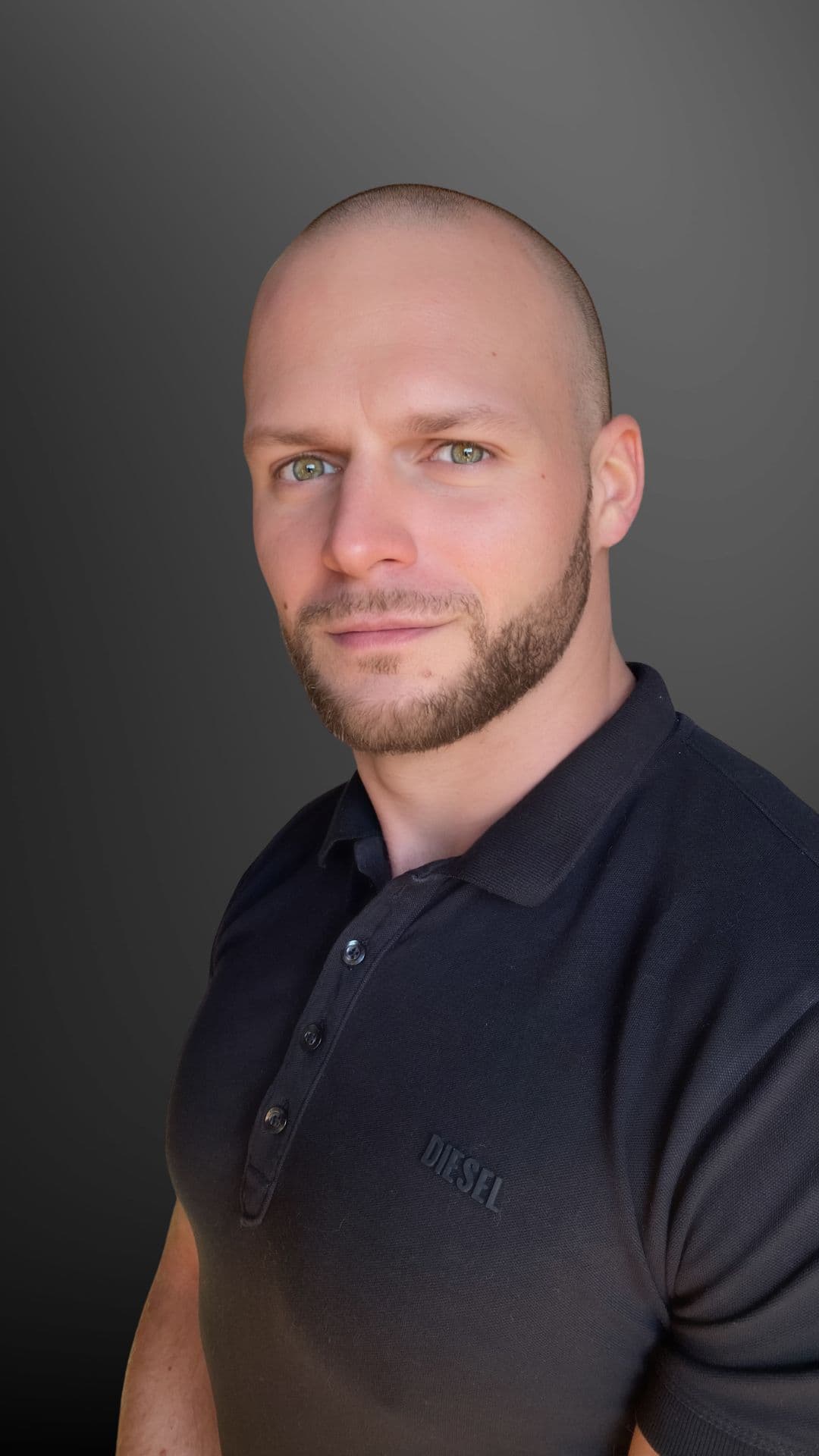
Francesco Zen, founder of ZTraining
Last reviewed 17 November 2026. General information, not medical advice: if you have a health condition, or have not exercised for a long time, talk to your GP before you start.
Twenty minutes, with me.
We talk about your week, your health and what you have tried before. If the programme fits you, I will say so. If it does not, I will say that too.