Rounded shoulders. Open the front, strengthen the back.
Short resets through the day, and a row that holds the shoulders in place.
To fix rounded shoulders, open the front and strengthen the back. Through the day, draw your shoulder blades gently back and down, bring your head over your shoulders and reach overhead with your ribs down. On two or more days a week, row with a band or a loaded backpack, so the upper back can hold the new position.
Exercises to pull shoulders back and down.
- 1. Shoulder blades back and down. Draw them gently together and down, hold, release. Arms relaxed.
- 2. Chin tuck. Sitting tall, slide your head straight back over your shoulders, as if making a double chin, then let go. More on forward head posture.
- 3. Reach overhead. Stand, reach both arms up as high as they go with your ribs down, then lower them slowly.
- 4. A row for the upper back. A resistance band fixed in a closed door, or a backpack loaded with books, pulled towards your ribs. Start each row by drawing the shoulder blade back, then bend the elbow.
- 5. A carry. A full bag in each hand, shoulders down and back, walking tall.
If you have shoulder or neck pain, see your GP or a physiotherapist before you add exercises. This page does not treat pain.
Rounded and hunched shoulders are rarely isolated.
A tight hip, a rounded shoulder, a sore lower back are rarely isolated. I read the whole structural chain, posture, asymmetries and compensations, before writing a single session. So when the shoulders round forward, I look at the head and the upper back as well. See a hunched upper back.
Stretching opens. Strength holds. I've found the overhead squat essential for long term function and postural strength. You can check yours in the Five Minute Baseline.
How to fix posture and rounded shoulders in the working day.
- Set the desk up once. Screen at eye height, feet flat on the floor, sitting back in the chair, so the desk is not pulling you forward.
- Change position often. Stand for calls, sit for writing. No single position is right for a whole day.
- Tie it to something that already happens. The end of every call, every refill of your water glass. A habit needs a trigger, not a reminder. The full desk routine is on posture exercises for desk workers.
Pull shoulders back, without forcing it.
- Pinning the shoulders back and holding them. Draw them back and down gently, then release. Repeated, not held stiff all day.
- Pulling with the arms only. Start each row by drawing the shoulder blade back, then bend the elbow.
- Stretching and nothing else. In my experience, a stretch on its own has worn off by the end of the afternoon. The order is on how to fix your posture.
What people ask first
What are the best exercises to pull your shoulders back?
Shoulder blades back and down through the day, a chin tuck and a reach overhead, then a row with a band or a loaded backpack for strength. The row is what holds the position.
Are rounded shoulders different for women?
The method is the same for women and men. The movements on this page do not change. Core, the back of the body and posture come first; add weight only when the current weight is steady.
Are hunched shoulders a sign of anxiety?
I cannot tell you that from posture, and it is not a question for a coach. If you have felt anxious or low for weeks, talk to your GP.
How often should I train my upper back?
The WHO guidelines for adults include muscle strengthening of the major muscle groups on two or more days a week, and the upper back is part of that. The short resets can be done every day.
What does coaching with ZTraining cost?
Z12 is 12 weeks for £900 in total, with a full refund if you cancel within 14 days of signing up, even if coaching has started. Z24 is 12 more weeks for £2,100, in one payment or two, only if we both agree it is needed.
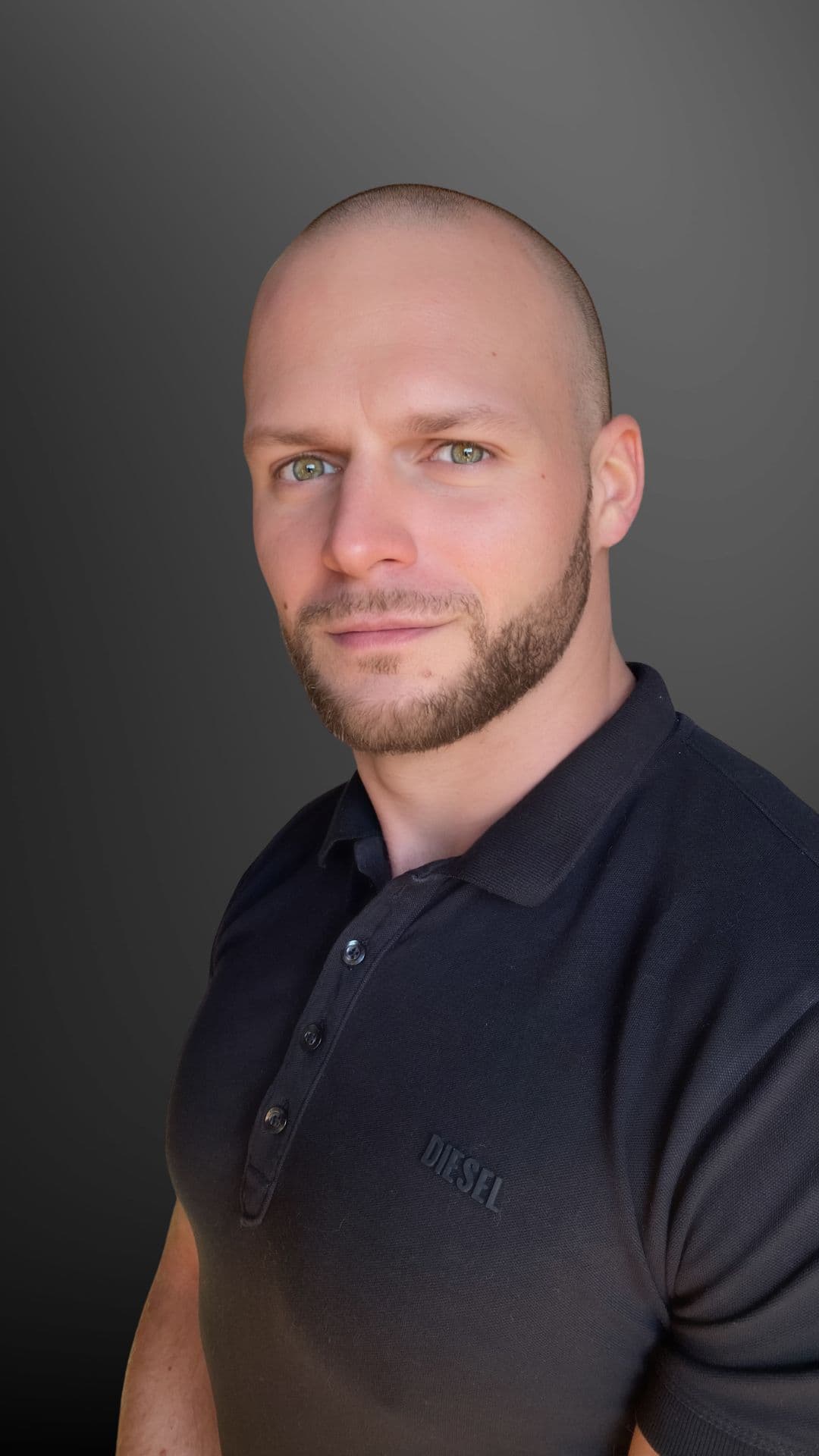
Francesco Zen, founder of ZTraining
Last reviewed 17 November 2026. General information, not medical advice: if you have a health condition, or have not exercised for a long time, talk to your GP before you start.
Twenty minutes, with me.
We talk about your week, your health and what you have tried before. If the programme fits you, I will say so. If it does not, I will say that too.