What is functional strength training? Strength for daily life.
Whole movements first, then the rest.
Functional strength training builds strength in the movements daily life asks for: standing up from a chair, getting down to the floor and up again, carrying the shopping, lifting from the floor and balancing on one leg. Traditional strength training often works one muscle at a time. I start with posture, stability and these whole movements.
Functional strength training, in plain words.
I build training in a fixed order. Physical efficiency first: posture, stability, and the movements daily life asks for. Then capacity: the heart and lungs. Then whole movement, such as swimming.
The first layer is what keeps the others possible. It is also the one most people skip, because it looks too simple to matter. More on the order in strength training for longevity.
Functional vs traditional strength training.
- Functional. Whole movements that use several joints and your balance at once: a squat, a carry, a lunge, getting up from the floor.
- Traditional. Often one muscle or one joint at a time, frequently on machines. Machines that hold the joint in a steady, supported position let strength build without asking the joint to manage balance at the same time.
- Not one or the other. Supported work has its place, and so do whole movements. Both are strength training: see what strength training is.
Everyday movements worth measuring.
- Getting up from the floor. In adults aged 46 to 75, scores of 8 and above out of 10 on the floor sit and rise sat in the lower risk groups.
- The overhead squat. I've found the overhead squat essential for long term function and postural strength.
- Strength on two or more days. The WHO guidelines for adults include muscle strengthening of the major muscle groups on two or more days a week.
The sit and rise is a link found across a group of people, not a prediction for you.
Complex strength training can wait.
- 1. Measure first. The Five Minute Baseline is three quick checks at home: balance, a squat and your energy.
- 2. Legs and the floor first. Standing up from a chair, getting down to the floor and up again, carrying the shopping. Support first, load later.
- 3. The trunk and the hips. They hold every other movement together: see a core workout at home and hip strengthening exercises.
- 4. Add load only when it is steady. More weight, more time or more sessions, one at a time.
- 5. Retest every 12 weeks. The same measures, so the numbers tell you what is working.
If you have a health condition, or have not exercised for a long time, talk to your GP before you start.
What people ask first
Is functional training better than lifting weights?
Neither on its own. Whole movements build the strength daily life asks for, and supported work on machines lets strength build when a joint needs steadying. A good plan uses what your tests show you need.
Can I do functional strength training at home?
Yes. A chair, a wall, the floor and something heavy to carry cover most of it. A pair of dumbbells or a kettlebell is enough at home when you need more.
What are functional strength exercises?
A squat or sit to stand, a push, a pull, a hinge, carrying something heavy, getting down to the floor and up again, and balancing on one leg.
How much time does it take?
The WHO guidelines for adults include muscle strengthening on two or more days a week. My whole method takes about three hours a week, often less.
What does coaching with you cost?
Z12 is 12 weeks for £900 in total, with a full refund if you cancel within 14 days of signing up, even if coaching has started. Z24 is 12 more weeks for £2,100, in one payment or two, only if we both agree it is needed.
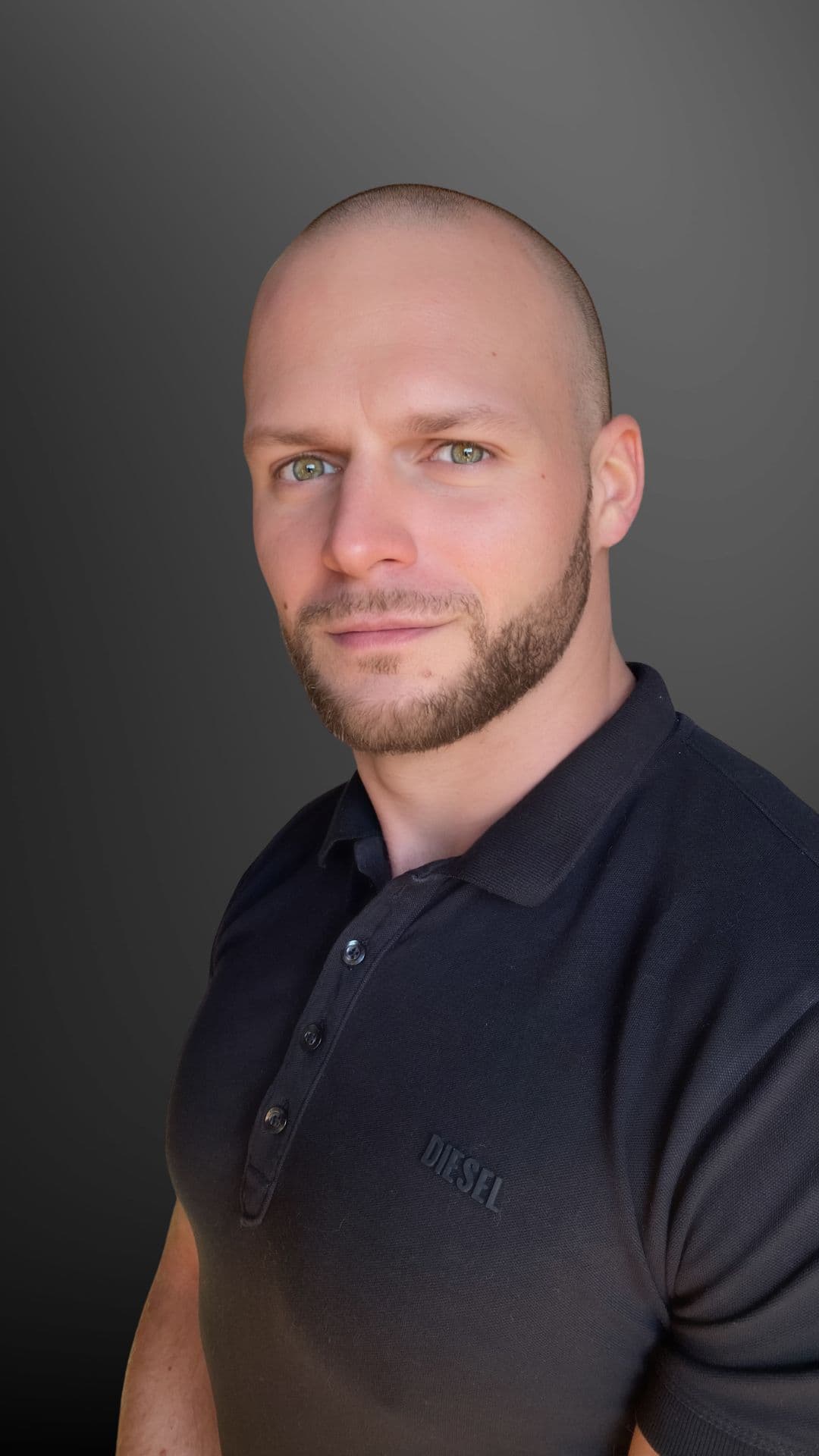
Francesco Zen, founder of ZTraining
Last reviewed 17 November 2026. General information, not medical advice: if you have a health condition, or have not exercised for a long time, talk to your GP before you start.
Twenty minutes, with me.
We talk about your week, your health and what you have tried before. If the programme fits you, I will say so. If it does not, I will say that too.