Upper body workout at home. Push, pull, press.
With body weight, a band, or a pair of dumbbells.
An upper body workout at home needs a push, a pull and a press overhead. Without weights: push-ups from a wall to the floor, a band row from a closed door, and a plank. With weights: the same pattern with dumbbells. Balance every push with a pull, and make it harder only when the current level is steady.
Upper body bodyweight workout, in order.
- 1. Count your push-ups first. Clean push-ups, in one straight line, so you know where you start. The Five Minute Baseline adds balance, a squat and your energy.
- 2. Push-ups, wall first, then the floor. Hands on a wall, then a kitchen worktop, then the floor. Lower under control; do not let the hips sag.
- 3. A row for the upper back. A resistance band fixed in a closed door, or a backpack loaded with books, pulled towards your ribs. It balances all the pushing.
- 4. A press overhead. A band under your feet, or the backpack held at your chest, pressed up until your arms are straight, ribs down.
- 5. A plank. Forearms on the floor, body in one line. The trunk holds every other movement together. More in a core workout at home.
If a shoulder hurts during a movement, stop that movement. If the pain lasts more than a few days, see your GP or a physiotherapist.
Upper body workout without weights: harder, not heavier.
- Change the position. Wall to worktop to floor for push-ups; a looser band to a tighter one for the row.
- Slow the lift down. The same movement, lowered under control with a pause at the bottom, becomes real work again, and your joints carry no more load to get there.
- One arm at a time. A one arm band row, then a one arm press. Each side has to do its own work.
Upper body workout with free weights.
When body weight is easy, an upper body weight workout at home uses the same push, pull and press with a pair of dumbbells. Add weight only when the current weight is steady: more reps than last time, in full control, and feeling easier.
- A floor press. Lie on your back, knees bent, and press the dumbbells up from your chest. The floor stops the elbows going too low.
- A one arm row. One hand and knee on a chair, back flat, the dumbbell pulled towards your hip.
- A seated press. A dumbbell in each hand at your shoulders, pressed up, lowered slowly.
The best bodyweight upper body workout is balanced.
- All push, no pull. Push-ups on their own leave the upper back with little to do. A row for every push keeps it working. See a hunched upper back.
- Training to failure every set. Failure is a tool, not the only tool, and most people never need it.
- Upper body on its own. The WHO guidelines for adults include muscle strengthening of the major muscle groups on two or more days a week: legs and trunk too. Why it matters: strength training for longevity.
What people ask first
Can you build upper body strength without weights?
Yes, for a long time. Harder push-up positions, one arm at a time with a band, and slower lowering keep the work real. When that stops being enough, a pair of dumbbells is all most people need.
What is a good upper body bodyweight routine?
Push-ups from a wall to the floor, a band row, a press overhead and a plank. One push, one pull, one press and a trunk hold, done well.
How many push-ups should I be able to do?
The push-up test on this site uses bands from a study of men: up to 10, 11 to 20, 21 to 30, 31 to 40, and more than 40. The reference data is for men only. For women, from the knees, the test uses the Canadian fitness appraisal norms for your age group. Count your own number, then build from it.
How often should I train my upper body?
The WHO guidelines for adults include muscle strengthening of the major muscle groups on two or more days a week. My whole method takes about three hours a week, often less. Retest every 12 weeks.
What does coaching with you cost?
Z12 is 12 weeks for £900 in total, with a full refund if you cancel within 14 days of signing up, even if coaching has started. Z24 is 12 more weeks for £2,100, in one payment or two, only if we both agree it is needed.
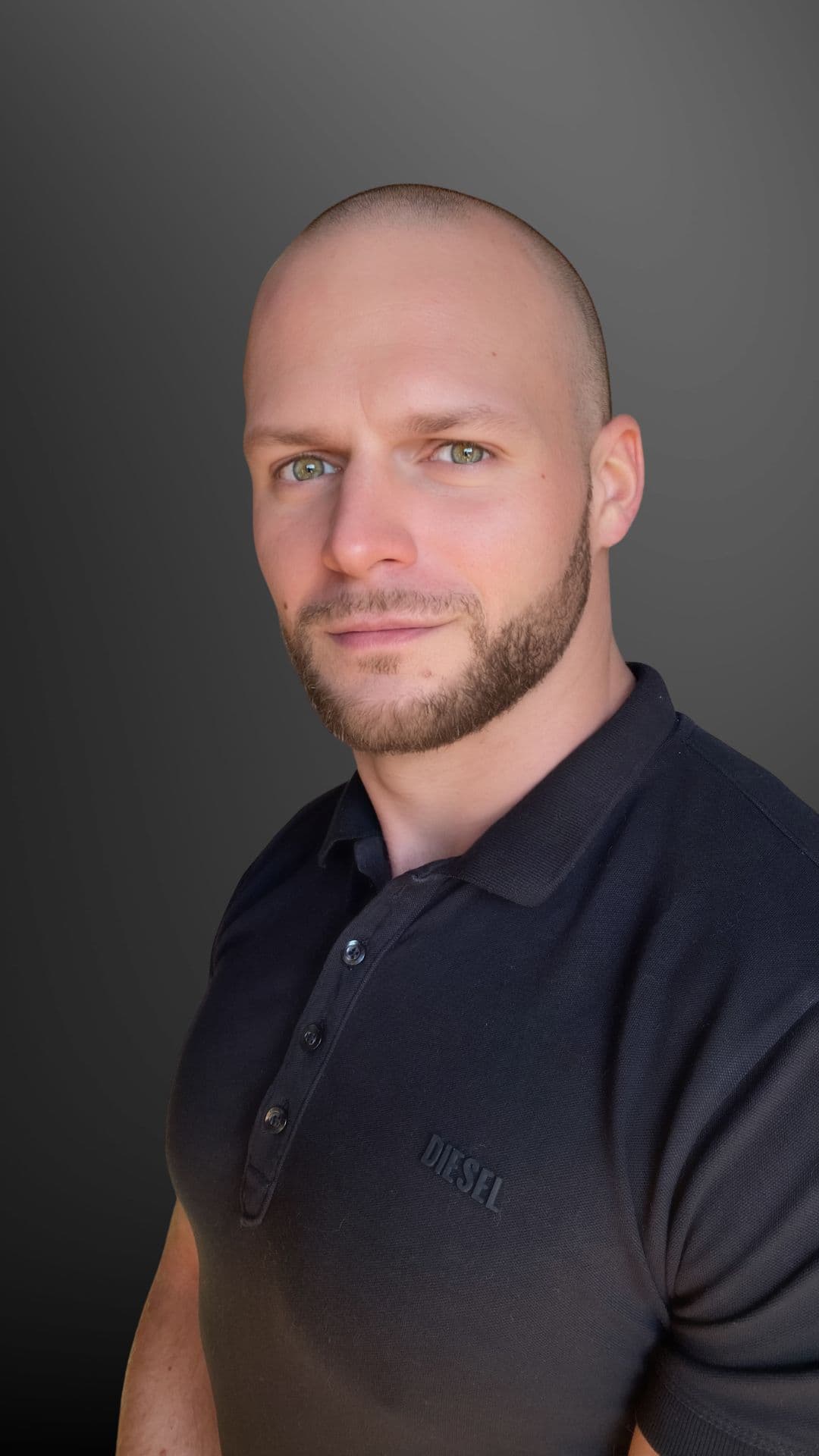
Francesco Zen, founder of ZTraining
Last reviewed 17 November 2026. General information, not medical advice: if you have a health condition, or have not exercised for a long time, talk to your GP before you start.
Twenty minutes, with me.
We talk about your week, your health and what you have tried before. If the programme fits you, I will say so. If it does not, I will say that too.