Dumbbell workout at home. One pair, the whole body.
A squat, a press, a row, a hinge and a carry.
A full body dumbbell workout at home needs one pair of dumbbells and a little floor space. Cover a squat, a push, a pull, a hinge and a carry in every session, on two or more days a week. Choose a weight you can lift with control, and go heavier only when the current weight is steady.
Full body workout with dumbbells at home.
- 1. Measure first. The Five Minute Baseline is three quick checks at home, balance, a squat and your energy, so the weight starts at the right level.
- 2. A squat, holding one dumbbell at your chest. Feet about shoulder width apart, sit back and down to a chair, stand tall.
- 3. A press from the floor. Lie on your back, knees bent, and press the dumbbells up from your chest, then lower them under control.
- 4. A one arm row. One hand on a chair, back long, pull the dumbbell towards your ribs. It balances all the pushing.
- 5. A hinge. Dumbbells in front of your thighs, push your hips back with your back long, then stand tall. The back of the body: see hip strengthening exercises for the floor versions.
- 6. A carry. Walk holding the dumbbells at your sides, standing tall.
If you have a health condition, or have not exercised for a long time, talk to your GP before you start.
A dumbbell workout plan for the week.
Full body means every session covers everything, so a missed day costs far less. The WHO guidelines for adults include muscle strengthening of the major muscle groups on two or more days a week, and my whole method takes about three hours a week, often less. Why it is worth the time is on strength training for longevity.
Run it as a circuit: the five movements one after another, then rest and go round again. Stop each set while your form is still clean. I set the work, the rest and the number of rounds for each client, by their level. For busy people, the ideal is keeping the heart rate up, because if you are busy you do not have much time for the gym. The best thing is a circuit: start from the lower body and the core, then train the whole body. Squats, alternating lunges, push-ups, close grip push-ups, chair dips for the triceps, mountain climbers, standing on one leg, calf raises. It can be many things, with equipment or without. But a circuit.
Dumbbells workout at home for beginners: when to go heavier.
- Add weight only when the current weight is steady: more reps than last time, in full control, and feeling easier.
- When the dumbbells run out, slow the lift down. The same weight, lowered and lifted under control, becomes real work again, and your joints do not carry more load to get there.
- No dumbbells yet? Start with strength training without weights, and add the trunk with a core workout at home.
What people ask first
Can you get a full body workout with only dumbbells?
Yes. One pair covers a squat, a press, a row, a hinge and a carry, which is the whole body. A pair of dumbbells or a kettlebell is enough at home.
What weight dumbbells should I start with?
One you can lift with control for every repetition, with good form to the end of the set. I set it for each client from their tests, so there is no single number here.
How often should I do a dumbbell workout?
Full body, on two or more days a week, as the WHO guidelines for adults suggest for muscle strengthening. Two short sessions you keep doing beat four you abandon.
Is a dumbbell workout at home as good as the gym?
Most of the plan works at home or in a hotel room. If you have a gym, we use it, including machines that hold the joint steady. At home you run out of weight sooner, and then I slow the lift down.
What does coaching with you cost?
Z12 is 12 weeks for £900 in total, with a full refund if you cancel within 14 days of signing up, even if coaching has started. Z24 is 12 more weeks for £2,100, in one payment or two, only if we both agree it is needed.
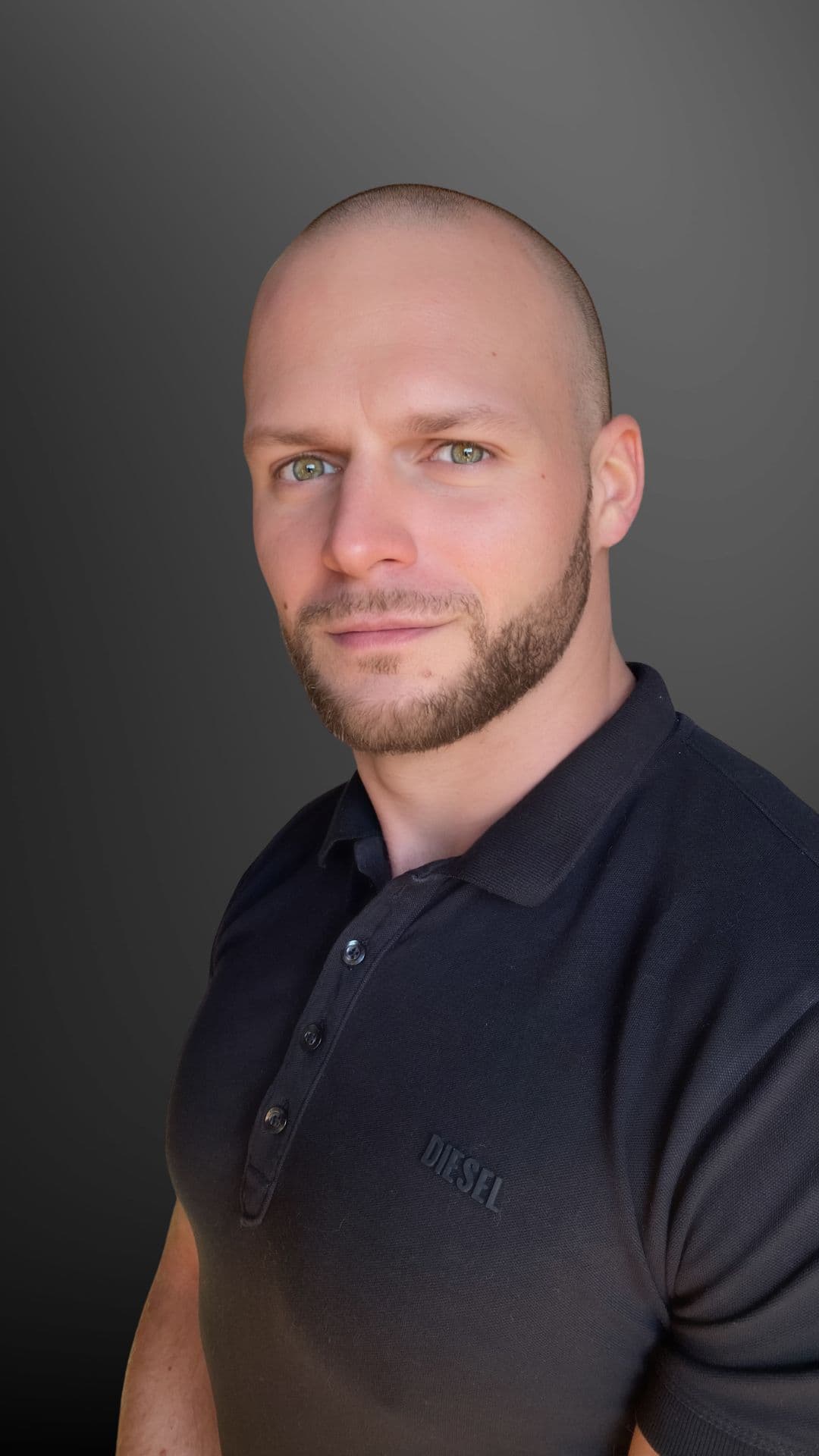
Francesco Zen, founder of ZTraining
Last reviewed 17 November 2026. General information, not medical advice: if you have a health condition, or have not exercised for a long time, talk to your GP before you start.
Twenty minutes, with me.
We talk about your week, your health and what you have tried before. If the programme fits you, I will say so. If it does not, I will say that too.